Financial Warning Signs for Singapore Businesses: 5 Risks Every Business Owner Should Know
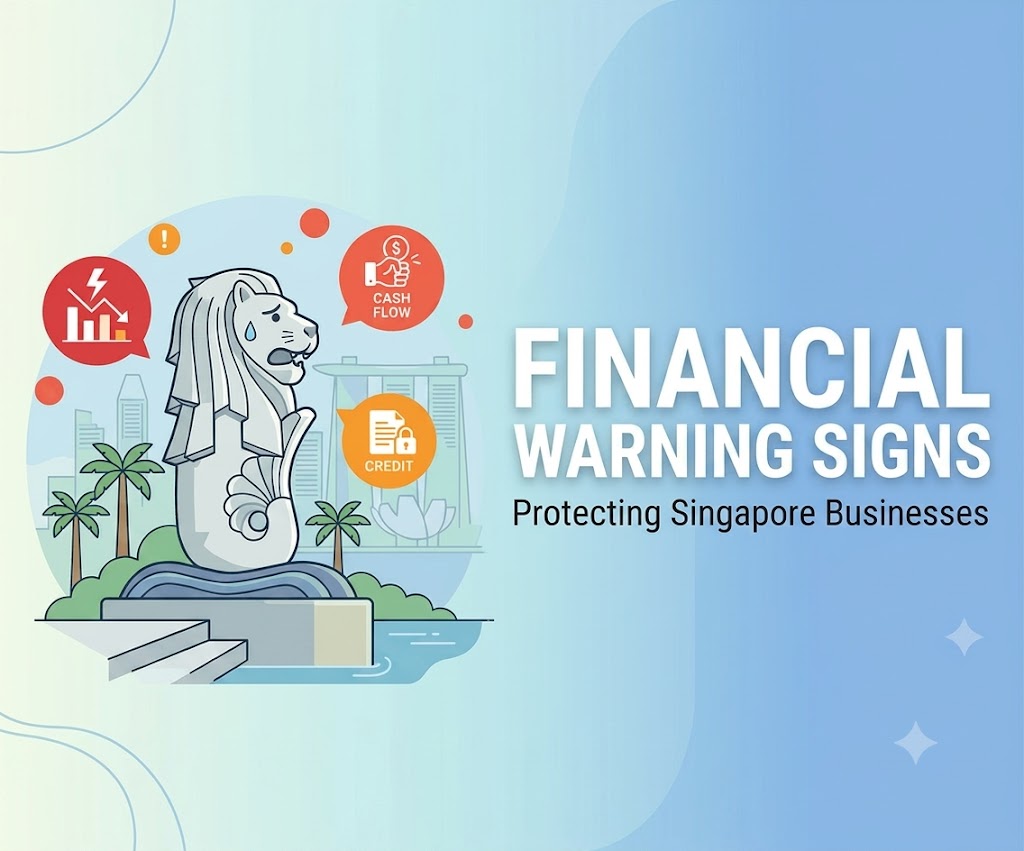
Financial warning signs are important indicators that every Singapore business owner should understand and monitor regularly. Cash flow problems, slow customer payments, rising operating costs, increasing debt and weak financial controls can all indicate that a company’s financial health needs closer attention.
Running a successful business is not only about increasing revenue. Business owners also need to understand whether the company is generating enough cash, controlling costs, managing financial obligations and maintaining reliable financial records.
In this article, uSafe explains 5 financial warning signs that Singapore business owners should know and the practical steps they can take to identify financial risks before they become more serious.
Expenses Singapore Businesses Should Review
Depending on the business model, management may need to monitor:
- Employee costs
- Office rent
- Software subscriptions
- Marketing expenses
- Professional fees
- Insurance
- Transportation
- Utilities
- Administrative costs
- Financing costs
Some expenses are necessary to support growth. However, businesses should periodically determine whether those costs continue to generate sufficient value.
Watch Your Profit Margins
Profit margins can help management understand whether the business is becoming more or less efficient.
A declining margin may be caused by:
- Higher supplier prices
- Increasing salary costs
- Pricing that is too low
- Excessive discounts
- Higher overhead
- Lower productivity
- Inefficient business processes
Reducing costs is not always the answer.
A business may instead need to review pricing, improve productivity, renegotiate supplier arrangements or redesign inefficient processes.
Financial Warning Sign 4: Debt and Financial Obligations Are Increasing
Debt can support business growth when it is used appropriately.
For example, financing may help a company purchase equipment, expand operations or invest in new opportunities.
However, increasing debt can become a financial warning sign when repayment obligations place significant pressure on cash flow.
What Should Businesses Review?
Management should understand:
- Total outstanding debt
- Interest expenses
- Loan repayment schedules
- Short-term liabilities
- Long-term liabilities
- Lease obligations
- Tax obligations
- Other contractual commitments
The amount of debt alone does not determine whether a company is financially healthy.
The more important question is whether the business can comfortably meet its obligations from available resources and operating cash flow.
Warning Signals to Watch
Management should investigate further when:
- Loan repayments consume a large portion of cash flow.
- Interest expenses are increasing significantly.
- The company relies on new borrowing to meet existing obligations.
- Cash reserves continue to decline.
- Revenue becomes increasingly unpredictable.
- Financing becomes essential for normal operations.
Before taking on additional debt, business owners should understand the effect of the financing on future cash flow.
Financial Warning Sign 5: Financial Records and Internal Controls Are Weak
Some financial warning signs are not immediately visible in revenue or profit figures.
Weak financial records and internal controls can create operational, reporting and compliance risks.
As businesses grow, informal processes that worked for a small company may no longer be appropriate.
For example, allowing one person to create payments, approve transactions and record accounting entries can create unnecessary control risks.
Common Signs of Weak Financial Controls
Businesses should review their processes if:
- Bank reconciliations are regularly delayed.
- Supporting documents are missing.
- Expenses are not properly approved.
- Accounting differences remain unexplained.
- Management reports are consistently late.
- Payment approval procedures are unclear.
- Financial responsibilities are concentrated in one person.
- Transactions are difficult to trace.
These conditions do not automatically indicate fraud. However, they can increase the risk of errors, inaccurate reporting and financial mismanagement.
Why Internal Controls Matter
Effective internal controls can help businesses:
- Protect company assets
- Reduce accounting errors
- Improve financial reporting
- Strengthen accountability
- Detect unusual transactions
- Improve management oversight
Internal controls should also develop as the company becomes larger and more complex.
How to Respond to Financial Warning Signs
Identifying a problem is only the beginning.
Once a financial warning sign appears, management should determine its underlying cause and decide what action is appropriate.
1. Review Financial Statements
Start with the company’s:
- Income statement
- Balance sheet
- Cash flow information
- Accounts receivable ageing
- Accounts payable ageing
- Debt position
Compare current results with previous periods to identify significant changes.
2. Compare Actual Results With the Budget
Businesses should compare actual performance against:
- Annual budgets
- Financial forecasts
- Previous-year results
- Previous-quarter results
- Management targets
Unexpected differences should be investigated.
3. Identify the Root Cause
A financial problem is often a symptom rather than the underlying issue.
For example:
Declining cash flow → slower customer payments → weak credit control
Another example is:
Lower profit margin → higher operating costs → inefficient spending
Identifying the root cause allows management to focus on the right solution.
4. Create an Action Plan
Depending on the problem, management may consider:
- Improving invoice collection
- Reviewing customer credit terms
- Reducing unnecessary expenses
- Reviewing pricing
- Renegotiating supplier terms
- Strengthening payment approvals
- Improving financial reporting
- Reviewing financing arrangements
Each action should have a responsible person and a realistic deadline.
Financial Health Should Be Reviewed Regularly
A financial review should not happen only when the business encounters a problem.
Regular monitoring gives management a clearer picture of financial performance and allows potential risks to be identified earlier.
Businesses can monitor key indicators monthly or quarterly depending on their size and complexity.
| Financial Indicator | What It Can Show |
|---|---|
| Revenue growth | Whether sales are increasing |
| Gross profit margin | Core business profitability |
| Net profit margin | Overall profitability |
| Operating cash flow | Ability to generate cash from operations |
| Accounts receivable | Customer payment performance |
| Accounts payable | Supplier obligations |
| Debt levels | Financing pressure |
| Current liabilities | Short-term obligations |
| Cash reserves | Short-term financial flexibility |
| Operating expenses | Cost efficiency |
The objective is not to monitor every number every day.
The objective is to identify meaningful changes early enough for management to respond.
Financial Records and Reporting in Singapore
Maintaining reliable financial records is also an important part of operating a business in Singapore.
The Inland Revenue Authority of Singapore (IRAS) provides requirements and guidance on keeping proper business and accounting records. Businesses should maintain appropriate records and supporting documents for their transactions.
For Singapore companies, the Accounting and Corporate Regulatory Authority (ACRA) also provides requirements relating to financial statements and financial reporting.
Businesses should therefore consider both financial management and compliance requirements when reviewing their financial processes.
For companies dealing with Singapore Financial Reporting Standards, management should also ensure that financial reporting is prepared using the applicable accounting framework.
Businesses can refer to the official [ACRA Guide to Accounting Standards] for information on Singapore’s accounting frameworks.
When Should a Singapore Business Seek Professional Advice?
Business owners do not need to wait until a financial problem becomes serious before seeking professional support.
Professional accounting or advisory assistance can be particularly useful when:
- Cash flow is consistently under pressure.
- Profit margins are declining.
- Accounts receivable are increasing.
- Debt is becoming difficult to manage.
- Financial records are not up to date.
- The business is expanding rapidly.
- The company is preparing for investment.
- Management is considering restructuring.
- There are concerns about accounting accuracy.
- Internal controls need improvement.
An independent professional perspective can help management identify financial issues that may be overlooked during day-to-day operations.
How USafe Supports Singapore Businesses
Financial information should do more than satisfy reporting requirements.
Reliable financial information can help business owners understand performance, identify risks and make informed decisions.
uSafe supports Singapore businesses through professional services covering accounting, audit, taxation, corporate secretarial services and business support.
For companies that need independent assurance, professional audit services can provide an additional review of financial statements and relevant financial processes.
Accounting and financial support can also help management maintain accurate records, monitor business performance and identify areas that require further attention.
As businesses grow, financial decisions often become connected with taxation, reporting, compliance, cash flow and long-term business strategy. A professional team can therefore provide value beyond the preparation of financial statements.
5 Financial Warning Signs at a Glance
Before making major business decisions, Singapore business owners should consider whether they are seeing any of the following financial warning signs:
1. Declining Cash Flow
Revenue may be increasing while available cash is falling.
2. Increasing Overdue Receivables
Customers are taking longer to pay their invoices.
3. Rising Operating Costs
Expenses are growing faster than revenue.
4. Increasing Debt
Financial obligations are placing greater pressure on cash flow.
5. Weak Financial Controls
Records, approvals and reporting processes are not sufficiently reliable.
Recognising these signals early can give management more time to investigate and respond.
Conclusion
Financial problems do not always begin with a major loss.
Sometimes the first financial warning signs are small changes that appear gradually: customers paying later, expenses increasing faster than revenue, cash reserves declining or financial controls becoming less effective.
For Singapore businesses, monitoring these indicators regularly can provide valuable insight into the company’s financial health.
The five key warning signs are:
- Revenue is growing but cash flow is declining.
- Customers are taking too long to pay.
- Expenses are growing faster than revenue.
- Debt and financial obligations are increasing.
- Financial records and internal controls are weak.
A financially healthy business is not simply a company that generates revenue or reports a profit. It is a business that understands its financial position, manages risks and uses reliable information to make better decisions.
If your business is showing one or more of these financial warning signs, a professional financial review can help identify potential issues and determine what should be addressed.
uSafe provides professional accounting, audit, taxation and corporate services to support businesses in Singapore with greater financial clarity, stronger controls and greater confidence in their business decisions
References / Sources
- ACRA – Financial Statements: Filing Requirements & Exemptions
ACRA – Financial Statements: Filing Requirements & Exemptions - IRAS – Record Keeping Requirements
IRAS – Record Keeping Requirements - ACRA – Guide to Accounting Standards.
ACRA – Guide to Accounting Standards - ACRA – Preparing Financial Statements
ACRA – Preparing Financial Statements - ACRA – Audit Exemptions: Small Company Concept
ACRA – Audit Exemptions: Small Company Concept - IRAS – Basic Guide to Corporate Income Tax for Companies
IRAS – Basic Guide to Corporate Income Tax for Companies



 English
  Chinese