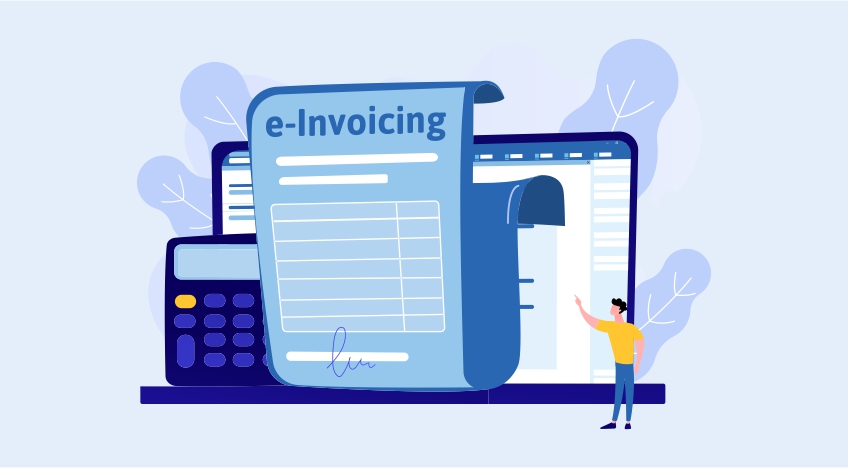
Malaysia is currently undergoing a significant digital transformation in tax administration through the introduction of e-Invoicing. This initiative, led by the Inland Revenue Board of Malaysia (LHDN), aims to modernise the tax system while simultaneously enhancing transparency and compliance in business transactions.
As highlighted in the HASiL Navigasi 2026 guide, traditional invoicing methods will gradually be replaced by digital invoices that are validated through the official tax authority system. Consequently, businesses across Malaysia must begin preparing their accounting systems and operational processes to comply with the new requirements.
1. What Is an e-Invoice?
To begin with, an e-Invoice is a digital representation of a transaction between a supplier and a buyer. Unlike traditional invoices that are issued in paper form or as simple PDF documents, an e-Invoice is created, transmitted, and validated electronically through the tax authority’s system.
More specifically, the Malaysian e-Invoice framework allows transactions to be validated in near real-time. Furthermore, the system covers several types of transactions, including:
- Business-to-Business (B2B) transactions
- Business-to-Consumer (B2C) transactions
- Business-to-Government (B2G) transactions
As a result, the use of e-Invoices improves the accuracy and reliability of transaction records.
2. Objectives of e-Invoice Implementation
Furthermore, the implementation of e-Invoicing serves multiple important objectives.
Firstly, it enhances tax transparency and compliance, since transaction data can be verified directly by LHDN through digital validation.
Secondly, it helps reduce tax leakage and fraudulent reporting, particularly in cases where sales might otherwise be under-declared.
In addition, the adoption of digital invoicing can significantly improve operational efficiency for businesses by reducing paperwork, manual processes, and administrative errors.
Therefore, the implementation of e-Invoicing is expected to benefit both businesses and the tax authority in the long term.
3. e-Invoice Implementation Timeline
In order to facilitate a smooth transition, the Malaysian government has adopted a phased implementation approach based on annual business turnover.
Accordingly, companies with larger revenues are required to implement the system earlier, while smaller businesses are given additional time to prepare.
The implementation timeline is as follows:
| Annual Revenue | Implementation Date |
|---|---|
| More than RM100 million | 1 August 2024 |
| RM25 million – RM100 million | 1 January 2025 |
| RM5 million – RM25 million | 1 July 2025 |
| Up to RM5 million | 1 January 2026 |
| Less than RM1 million | Currently exempt |
Consequently, businesses should review their revenue thresholds carefully in order to determine their mandatory implementation date.
4. MyInvois System and Digital Platform
In addition, LHDN has introduced the MyInvois system to support the issuance and validation of e-Invoices.
Through this platform, businesses are able to:
- Generate and submit e-Invoices
- Validate transaction data with LHDN
- Store and manage invoice records
- Access invoice data for compliance and reporting purposes
Furthermore, the MyInvois system can be accessed either through the MyInvois portal or through API integration with accounting and ERP systems.
As a result, many businesses are currently upgrading their accounting software to ensure compatibility with the e-Invoice framework.
5. Interim Relaxation Period
Moreover, the government has introduced a transition or relaxation period to help businesses gradually adapt to the new system.
During this period, businesses are encouraged to transition to e-Invoicing while receiving guidance and technical support. At the same time, enforcement actions may be temporarily relaxed to allow businesses sufficient time to implement the required technological changes.
Therefore, companies should use this transition period to review their internal processes and prepare their systems accordingly.
6. Businesses That May Be Exempt
Importantly, not all businesses are required to adopt e-Invoicing immediately.
Currently, businesses with annual turnover below RM1 million are exempt from mandatory implementation.
Nevertheless, these businesses may still voluntarily adopt the system if they wish to digitalise their invoicing processes and improve operational efficiency.
Over time, however, smaller businesses may also be encouraged to adopt e-Invoicing as Malaysia continues to expand its digital tax ecosystem.
7. Preparing for e-Invoice Compliance
Given the scale of this transformation, businesses should start preparing as early as possible.
Firstly, companies should review their existing invoicing processes and identify potential gaps in compliance.
Secondly, they should ensure that their accounting systems are capable of integrating with the MyInvois platform.
In addition, companies should train their finance and accounting teams so that they fully understand the new invoicing procedures.
Finally, businesses should conduct system testing and integration checks to ensure that the transition to e-Invoicing is smooth and disruption-free.
Key Takeaways
| Topic | Explanation |
|---|---|
| e-Invoice | Digital invoice validated through the LHDN system |
| Transactions covered | B2B, B2C, and B2G |
| Implementation approach | Phased rollout based on company turnover |
| System platform | MyInvois portal and API integration |
| Exemption threshold | Businesses with turnover below RM1 million |
Final Thoughts
In conclusion, the implementation of e-Invoicing marks a major milestone in Malaysia’s tax digitalisation efforts. Although businesses may initially face challenges in adapting their systems and workflows, the long-term benefits include improved compliance, greater efficiency, and more transparent financial reporting.
Therefore, companies should begin evaluating their readiness as early as possible. By upgrading their accounting systems and preparing their teams in advance, businesses can ensure a smooth transition to the MyInvois e-Invoice system.
Disclaimer: This article is for informational purposes only and does not constitute tax or compliance advice. Organisations should consult their tax advisors or refer to IRAS guidance for tailored instructions.
Source: https://www.hasil.gov.my/media/3bvlkbww/navigasi-hasil-2026.pdf
 English
  Chinese