Hong Kong Annual Return: Filing Requirements and Deadlines
Hong Kong Annual Return is a key corporate compliance requirement for companies incorporated in Hong Kong. Every eligible company must keep its company information up to date and submit the required return to the Companies Registry within the applicable deadline.
For business owners, directors, and overseas investors, understanding the Hong Kong Annual Return process can help prevent late filing penalties and unnecessary compliance problems.
This guide explains the filing requirements, deadlines, information needed, common mistakes, and practical steps businesses can take to stay compliant.
What Is a Hong Kong Annual Return?
A Hong Kong Annual Return is a statutory filing that provides updated information about a Hong Kong company to the Companies Registry.
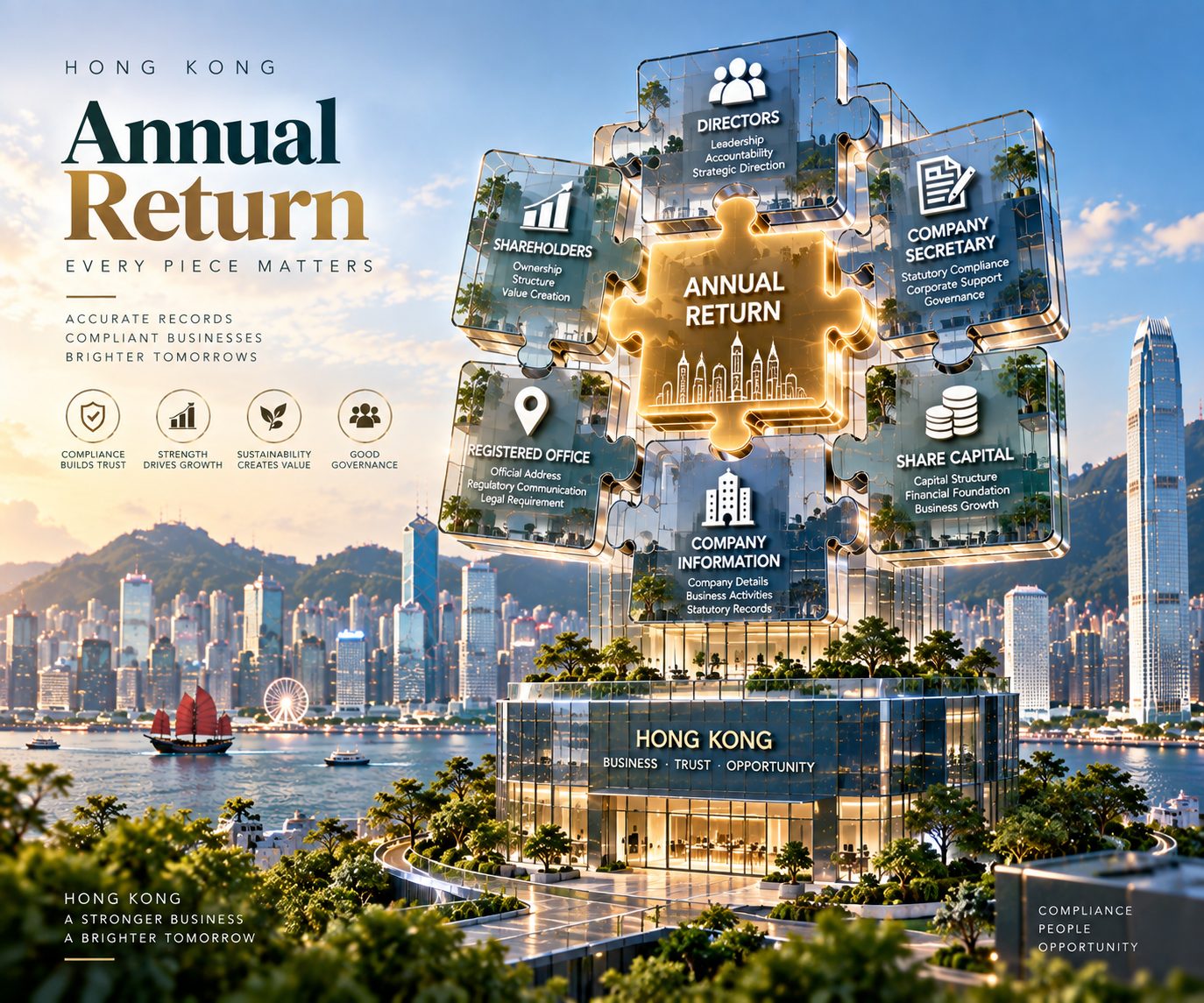
The return generally confirms important corporate details, such as:
- Registered office information
- Company secretary details
- Directors and shareholders
- Share capital
- Company status
- Other prescribed corporate information
However, an Annual Return is not the same as a company’s financial statements or profits tax return.
Instead, it focuses primarily on maintaining accurate corporate information with the Companies Registry.
Therefore, companies should treat the Annual Return as part of their regular corporate compliance calendar.
Who Needs to File a Hong Kong Annual Return?
Generally, Hong Kong companies incorporated under the Companies Ordinance must comply with annual filing requirements unless a specific exemption or different requirement applies.
The exact filing requirements can depend on the company’s type and circumstances.
For example, private companies, public companies, and companies limited by guarantee may have different filing rules.
As a result, directors should confirm the applicable requirements for their specific company rather than relying on a general filing date.
When Is the Hong Kong Annual Return Due?
The filing deadline depends on the type of company and the relevant anniversary date.
For many private companies, the Annual Return is generally due within 42 days after the company’s return date, which is normally the anniversary of the company’s incorporation.
For example, if a company’s return date falls on 15 October, the company should generally submit its Annual Return within the applicable 42-day period.
However, businesses should always verify the current requirements with the Hong Kong Companies Registry, particularly when dealing with changes in company status or filing circumstances.
Keeping a compliance calendar can make this process much easier.
What Information Is Included in a Hong Kong Annual Return?
A Hong Kong Annual Return typically contains information that allows the Companies Registry to maintain an accurate record of the company.
Depending on the company and filing requirements, information may include:
1. Company Details
The filing can include the company’s registered name and registration information.
2. Registered Office
The company should maintain an accurate registered office address in Hong Kong.
If the registered office has changed, the company may need to complete the relevant notification separately.
3. Directors
The return may contain information about the company’s directors.
Companies should ensure that director information remains accurate and consistent with the company’s statutory records.
4. Company Secretary
The company secretary plays an important role in corporate compliance.
Therefore, the company should ensure that the secretary’s details are current and properly recorded.
5. Shareholders and Share Capital
The Annual Return can also contain information relating to shareholders and the company’s share capital.
Businesses should reconcile this information with their internal corporate records before filing.
Hong Kong Annual Return vs Profits Tax Return
One common mistake is assuming that the Annual Return and tax return are the same filing.
They are not.
The Hong Kong Annual Return is a corporate filing made to the Companies Registry. In contrast, a profits tax return relates to the company’s tax obligations and is handled by the Inland Revenue Department.
The two filings serve different purposes.
Therefore, completing a tax filing does not automatically satisfy the company’s Annual Return obligation.
Businesses should track both obligations separately.
What Happens If a Company Files Late?
Late filing can create unnecessary compliance costs.
The Companies Registry may impose statutory registration fees or penalties depending on the circumstances and the length of the delay.
More importantly, repeated late filings can make a company appear poorly managed from a corporate governance perspective.
This can become relevant when the company:
- Opens a corporate bank account
- Applies for financing
- Enters into an investment transaction
- Changes shareholders
- Conducts due diligence
- Works with professional advisers
- Prepares for a company sale
For this reason, directors should avoid treating the Annual Return as an administrative formality.
Common Hong Kong Annual Return Mistakes
Businesses often make similar mistakes when preparing their annual filing.
Using Outdated Company Information
Companies sometimes submit information without checking whether their directors, shareholders, secretary, or registered office details have changed.
As a result, the filing may not accurately reflect the company’s current records.
Missing the Filing Deadline
A busy finance or management team can easily overlook an annual deadline.
However, the company remains responsible for meeting its statutory filing obligations.
Confusing Corporate and Tax Compliance
A company may complete its tax obligations but forget its Companies Registry filing.
Therefore, businesses should maintain a separate corporate compliance checklist.
Failing to Reconcile Company Records
Changes in shareholding, directorship, or company secretary details should be properly reflected in statutory records.
Before filing, businesses should compare the Annual Return information with their corporate documents.
Leaving Compliance Until the Last Minute
Last-minute filing increases the risk of errors.
Instead, companies should prepare their information several weeks before the deadline.
How to Prepare a Hong Kong Annual Return
A simple preparation process can reduce the risk of errors.
Step 1: Check the Return Date
First, confirm the company’s return date and calculate the applicable filing deadline.
Step 2: Review Corporate Information
Next, review the company’s:
- Directors
- Company secretary
- Registered office
- Shareholders
- Share capital
- Other relevant statutory information
Step 3: Reconcile the Records
Compare the information with the company’s statutory registers and recent corporate changes.
Step 4: Prepare the Required Form
Prepare the appropriate Annual Return according to the company’s type and current requirements.
Step 5: Submit the Filing
Submit the return through the applicable Companies Registry filing channel.
Step 6: Keep Evidence of Filing
Finally, retain confirmation and relevant corporate records.
This creates a clear compliance trail for future reference.
How a Company Secretary Can Help
A professional company secretary can help businesses manage recurring corporate compliance obligations.
For example, a company secretary may assist with:
- Monitoring filing deadlines
- Maintaining statutory records
- Preparing corporate filings
- Updating company information
- Supporting directors with compliance matters
- Coordinating corporate changes
This support can be particularly useful for overseas shareholders who operate a Hong Kong company without a large local administration team.
Hong Kong Annual Return Checklist
Before submitting the filing, businesses can use the following checklist:
Hong Kong Annual Return Checklist
- Confirm the return date
- Confirm the filing deadline
- Check the registered office
- Review director information
- Review company secretary information
- Confirm shareholder information
- Check share capital details
- Reconcile statutory records
- Prepare the required filing
- Submit before the deadline
- Keep filing evidence
A simple checklist can help prevent avoidable compliance issues.
Why Annual Compliance Matters for Hong Kong Businesses
Corporate compliance supports more than regulatory requirements.
Accurate company records can also improve transparency and make business administration easier.
For example, investors, banks, business partners, and professional advisers may need reliable corporate information during due diligence.
Furthermore, well-maintained records can help directors respond quickly when the company undergoes structural changes.
Consequently, businesses should integrate Annual Return preparation into their broader corporate governance process.
How USafe Can Support Hong Kong Company Compliance
Managing annual filing obligations can become challenging when directors operate across different countries.
USafe can support businesses with practical corporate compliance and professional services in Hong Kong.
Depending on the company’s needs, professional support may include corporate secretarial services, statutory compliance assistance, accounting, tax, and other business advisory services.
For companies with shareholders or directors based outside Hong Kong, having a local professional team can also make recurring compliance easier to manage.
If you are reviewing your company’s Hong Kong compliance obligations, USafe can help you identify the relevant filing requirements and organize your compliance process.
Frequently Asked Questions
Is Hong Kong Annual Return the same as a tax return?
No. The Annual Return is a corporate filing associated with the Companies Registry. A profits tax return serves a different purpose and relates to the company’s tax obligations.
How often must a Hong Kong company file an Annual Return?
Companies generally need to meet annual filing requirements. However, the exact deadline depends on the company’s type and applicable statutory requirements.
What information should I check before filing?
Companies should review their registered office, directors, company secretary, shareholders, share capital, and other relevant corporate information.
Can a company secretary handle the Annual Return?
Yes. A professional company secretary can assist with preparing and submitting corporate filings and maintaining statutory records.
What happens if the Annual Return is filed late?
Late filing can result in additional statutory fees or penalties. Therefore, companies should monitor their filing dates and submit the return on time.
Conclusion
The Hong Kong Annual Return is an important part of maintaining corporate compliance in Hong Kong. Although the filing may appear straightforward, companies need to keep their information accurate and meet the applicable deadline.
Therefore, directors should review their corporate records regularly, maintain a compliance calendar, and avoid last-minute filing.
For overseas business owners, professional corporate secretarial and compliance support can make the process more efficient.
By treating the Hong Kong Annual Return as part of a broader compliance strategy, businesses can maintain accurate corporate records and reduce avoidable regulatory risks.
Suggested internal links for uSafe:
- Hong Kong Company Audit
- Hong Kong Company Secretary Services
- Hong Kong Accounting Services
- Hong Kong Tax Services
- Hong Kong Company Registration
- Corporate Compliance Services



 English
  Chinese