

When Financial Records Don’t Match: How Businesses Can Find and Fix Reconciliation Problems
Financial reconciliation problems can make it difficult for businesses to understand whether their accounting records accurately reflect what has happened. When invoices, payments, bank statements, and accounting records do not match, finance teams need to determine why the difference exists.
In practice, these differences can happen for many reasons. For example, a payment may be recorded before it appears on a bank statement. Similarly, a supplier invoice may be missing from the accounting system, or the same transaction may accidentally be recorded twice.
Fortunately, some differences are temporary and easy to explain. However, others may indicate weaknesses in transaction recording, documentation, or financial processes.
Therefore, identifying and resolving financial reconciliation problems can help businesses maintain more reliable financial records and reduce the risk of unresolved discrepancies.
What Are Financial Reconciliation Problems?
Financial reconciliation is the process of comparing two sets of financial information to determine whether they agree.
For example, businesses may reconcile:
- Accounting records with bank statements
- Customer invoices with payments received
- Supplier statements with accounts payable records
- Credit card statements with expense records
- Intercompany balances between related entities
However, the purpose is not simply to make two numbers identical.
Instead, the goal is to understand why a difference exists and determine whether it represents a legitimate reconciling item or an accounting issue.
According to ACCA guidance on maintaining financial records, bank reconciliation can help identify errors, omissions, and timing differences between accounting records and bank records.
As a result, reconciliation is an important part of maintaining reliable financial information.
Why Financial Reconciliation Problems Occur
There is rarely one single cause of a reconciliation difference.
In fact, financial reconciliation issues can arise at different stages of the transaction process.
Timing Differences
A transaction may appear in one record before it appears in another.
For instance, a company may record a payment on Friday while the bank processes it on Monday.
Consequently, the accounting ledger and bank statement can show different balances temporarily.
Nevertheless, this does not necessarily mean that either record is incorrect.
Instead, the finance team should identify the timing difference and confirm that it is resolved when the transaction is processed.
Missing Transactions
Sometimes a transaction occurs but is not entered into the accounting system.
Common examples include:
- Bank charges
- Interest income
- Direct debits
- Card transactions
- Automatic payments
As a result, the accounting records will not agree with the external financial record.
Therefore, regular reconciliation can help identify transactions that still need to be recorded.
Incorrect Amounts
Another common cause of accounting reconciliation problems is an incorrect amount.
For example:
| Record | Amount |
|---|---|
| Customer invoice | $10,000 |
| Payment received | $9,800 |
| Accounting record | $10,000 |
At first, the $200 difference may appear straightforward.
However, the difference could result from a bank charge, short payment, credit note, withholding arrangement, or recording error.
For this reason, the difference should be investigated before an adjustment is made.
The important question is not simply, “What number should be changed?”
Instead, the finance team should first ask, “Why are these amounts different?”
Duplicate Transactions
Duplicate entries can also create reconciliation discrepancies.
For example, a $3,200 payment may accidentally be recorded twice.
The actual payment is:
$3,200
Meanwhile, the accounting system shows:
$3,200 + $3,200 = $6,400
As a result, the accounting balance becomes overstated.
Therefore, regular reconciliation can help identify duplicate transactions before they create larger reporting problems.
Missing Supporting Documents
A transaction may appear in the accounting system while the related invoice, receipt, or payment confirmation cannot be located.
In this situation, the amount may appear correct, but the business still needs to establish what the transaction represents.
Therefore, financial record discrepancies are not always caused by incorrect numbers.
Sometimes, the problem is that the business cannot adequately support or explain the transaction.
A Simple Example of a Reconciliation Problem
Consider a business that records the following:
| Record | Amount |
|---|---|
| Customer invoice | $10,000 |
| Payment received | $9,800 |
| Bank statement | $9,800 |
| Accounting system | $10,000 |
At first, there appears to be a $200 discrepancy.
However, the difference alone does not explain the problem.
Therefore, the finance team may need to review:
- Bank charges
- Customer deductions
- Credit notes
- Withholding amounts
- Partial payments
- Recording errors
Only after identifying the underlying cause should the business decide whether an accounting adjustment is required.
In other words, financial reconciliation problems require investigation rather than automatic correction.
The Five-Step Financial Reconciliation Process
A practical reconciliation process can be organised into five stages:
MATCH → IDENTIFY → INVESTIGATE → CORRECT → VERIFY
Together, these five stages give businesses a consistent way to deal with financial reconciliation issues.
Step 1: Match
First, compare the two relevant records.
For example:
Bank statement ↔ Accounting ledger
or:
Customer statement ↔ Accounts receivable ledger
The objective, therefore, is to identify transactions that agree and transactions that require further review.
Step 2: Identify
Next, classify each difference.
| Difference | Possible explanation |
|---|---|
| Transaction appears only in bank | Missing accounting entry |
| Transaction appears only in ledger | Timing difference |
| Amounts differ | Partial payment or recording error |
| Same transaction appears twice | Duplicate entry |
| Supplier balance differs | Missing invoice or credit note |
By doing this, the finance team can make reconciliation more systematic.
Step 3: Investigate
Once a difference has been identified, review the relevant supporting information.
Depending on the transaction, this may include:
- Invoice
- Receipt
- Bank statement
- Payment confirmation
- Credit note
- Purchase order
- Supplier statement
- Customer correspondence
- Contract
- Accounting entry
Furthermore, the objective is to establish what actually happened.
Step 4: Correct
If the investigation confirms an accounting error, the appropriate correction can be made.
For example, the finance team may need to:
- Record a missing transaction
- Remove a duplicate entry
- Correct an incorrect amount
- Reclassify a transaction
- Record a bank charge
- Adjust a customer balance
In addition, the correction should be supported by appropriate documentation.
Step 5: Verify
Finally, check that the correction resolves the difference.
This step is particularly important because correcting one entry can sometimes create another discrepancy.
Therefore, reconciliation should end with verification rather than simply making an adjustment.
Common Financial Reconciliation Issues
Businesses may experience several recurring types of reconciliation problems.
Bank Reconciliation Differences
Bank reconciliation compares accounting records with bank records.
For example, common differences include:
- Outstanding payments
- Deposits in transit
- Bank fees
- Interest
- Direct debits
- Unrecorded transactions
- Timing differences
- Accounting errors
Ultimately, the purpose is to determine whether each difference can be explained or requires further action.
Accounts Receivable Differences
Accounts receivable reconciliation compares customer balances with invoices and payments.
For example, a customer may appear to owe $20,000 in the accounting system while the customer’s records show $18,500.
In this case, the difference could result from:
- Unallocated payment
- Credit note
- Short payment
- Duplicate invoice
- Incorrect invoice amount
- Timing difference
As a result, regular review can help businesses identify financial reconciliation issues before they affect customer relationships.
Accounts Payable Differences
Supplier reconciliation compares the company’s accounts payable records with supplier statements.
Potential differences include:
- Missing invoices
- Credit notes
- Duplicate invoices
- Payments not allocated correctly
- Incorrect supplier balances
Consequently, regular supplier reconciliation can help identify unresolved balances earlier.
Intercompany Reconciliation Differences
Businesses with multiple entities may also need to reconcile balances between related companies.
For example:
Company A records: $50,000 receivable
Company B records: $48,000 payable
The $2,000 difference requires investigation.
Possible causes include:
- Different transaction dates
- Currency differences
- Unrecorded invoices
- Service fees
- Intercompany payments
- Different accounting treatments
Therefore, intercompany reconciliation can become increasingly important as a business expands.
What Can Reconciliation Problems Reveal?
A single discrepancy may have a simple explanation.
However, recurring accounting reconciliation problems can reveal weaknesses in a financial process.
For example, repeated duplicate payments may indicate a problem with transaction approval.
Similarly, recurring missing invoices may indicate that documents are not being collected consistently.
Likewise, frequent customer balance differences could point to problems with payment allocation.
As a result, reconciliation can provide more than an accounting check.
In fact, it can also help businesses identify process weaknesses.
How Financial Reconciliation Problems Can Affect a Business
Reconciliation differences can affect several areas of business operations.
Cash Visibility
When bank records and accounting records do not align, management may have less clarity over available cash.
Therefore, unresolved discrepancies can make short-term cash monitoring more difficult.
Customer Collections
Incorrect customer balances can complicate collection activities.
For instance, a customer may dispute an amount because a payment or credit note has not been allocated correctly.
Supplier Relationships
Incorrect accounts payable balances can also create unnecessary discussions with suppliers.
In addition, missing invoices or incorrectly recorded payments can delay account settlement.
Financial Reporting
Unresolved financial record discrepancies may affect account balances and the reliability of financial reports.
Consequently, businesses should investigate significant differences before finalising relevant financial information.
Audit Preparation
When transactions cannot be easily explained or supported, additional investigation may be required during financial review or audit procedures.
For this reason, good reconciliation practices can make financial records easier to review.
How Businesses Can Reduce Financial Reconciliation Issues
Businesses can take several practical steps to reduce recurring discrepancies.
Reconcile Regularly
First, establish an appropriate reconciliation frequency based on transaction volume and business risk.
For example, high-volume accounts may require more frequent review.
Organise Supporting Documents
Next, keep invoices, receipts, payment confirmations, and bank statements in a consistent system.
As a result, when documents can be located easily, financial reconciliation problems are generally easier to investigate.
Establish Clear Responsibilities
In addition, someone should be responsible for preparing each reconciliation.
Depending on the organisation’s structure, another person may review significant differences.
Therefore, clear ownership can reduce the risk of unresolved items being carried forward.
Investigate Exceptions
Instead of carrying unexplained differences into the next reporting period, investigate them promptly.
For this reason, each significant exception should have an explanation, status, or action owner.
Track Recurring Discrepancies
Finally, look for patterns.
If the same type of reconciliation discrepancy appears repeatedly, investigate the underlying process.
For example, recurring duplicate payments may indicate an approval issue.
Likewise, repeated missing invoices may indicate a document collection problem.
Ultimately, the objective is to address the source of the problem rather than repeatedly correcting the same symptom.
A Practical Financial Reconciliation Checklist
Businesses can use this checklist when reviewing financial records.
| Check | Question |
|---|---|
| Transactions | Have all relevant transactions been recorded? |
| Amounts | Do recorded amounts match supporting documents? |
| Dates | Are transaction dates consistent? |
| Payments | Have payments been allocated correctly? |
| Bank | Does the ledger reconcile with the bank statement? |
| Customers | Do customer balances agree with supporting records? |
| Suppliers | Do supplier balances agree with supplier statements? |
| Documents | Can significant transactions be supported? |
| Duplicates | Are there duplicate transactions? |
| Exceptions | Have unexplained differences been investigated? |
| Corrections | Have confirmed errors been corrected? |
| Review | Has the reconciliation been reviewed where appropriate? |
In practice, this checklist can help businesses identify financial reconciliation issues before they become larger accounting problems.
Financial Records and Reconciliation Requirements
Businesses should also consider the record-keeping requirements applicable to their jurisdiction.
For example, ACRA states that Singapore companies must keep accounting records for at least five years after the end of the financial year in which the transactions or operations were completed.
These records should support the preparation of true and fair financial statements.
Similarly, in Hong Kong, the Inland Revenue Department states that businesses must keep sufficient records of income, expenditure, assets, and liabilities.
Generally, these records must be retained for at least seven years.
The required records can include books of account, vouchers, bank statements, invoices, and receipts.
Therefore, these requirements demonstrate why organised financial records are important.
Nevertheless, businesses should always check the current rules applicable to their own jurisdiction and circumstances.
When Should a Business Review Its Financial Reconciliation Process?
A reconciliation process may deserve closer attention when a business experiences:
- Increasing transaction volume
- Multiple bank accounts
- Multiple currencies
- Rapid growth
- Several accounting users
- Frequent payment discrepancies
- Repeated customer disputes
- Unexplained supplier balances
- Regular audit adjustments
- Difficult month-end closing
However, these situations do not automatically indicate a serious accounting problem.
Instead, they may show that existing processes need to evolve as the business becomes more complex.
How uSafe Can Support Financial Record Management
Reliable reconciliation starts with organised accounting records and clearly defined financial processes.
uSafe provides accounting and bookkeeping support for businesses that need assistance with maintaining financial records, preparing financial statements, and managing financial information.
You can learn more about uSafe’s accounting and bookkeeping services and explore the company’s services for businesses operating in different markets.
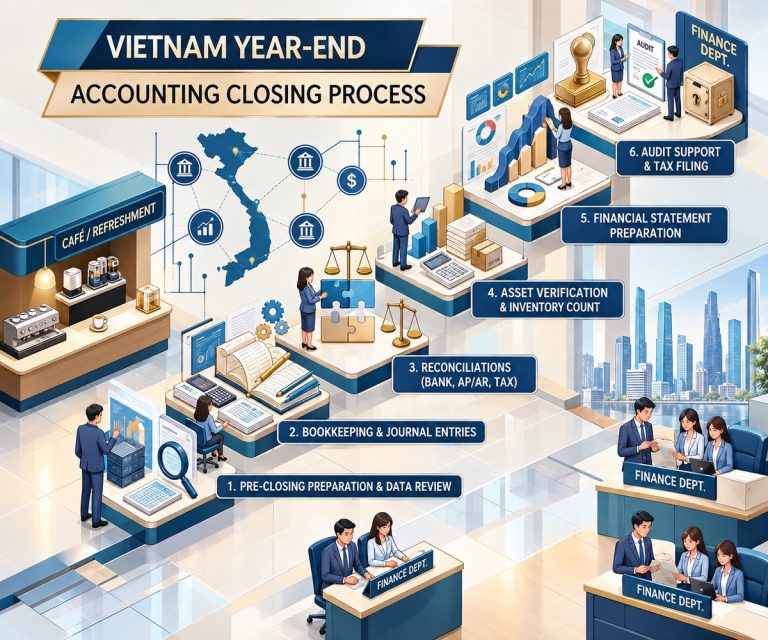
For businesses in Vietnam, uSafe also provides accounting and bookkeeping services in Vietnam, including financial statement preparation and management reporting.
If, however, your business is experiencing recurring financial reconciliation problems, professional accounting support can help review the underlying process and identify areas that may require improvement.
Frequently Asked Questions
What are financial reconciliation problems?
Financial reconciliation problems occur when two sets of financial records do not agree and the difference has not yet been explained or resolved.
What causes financial reconciliation issues?
Common causes include timing differences, missing transactions, incorrect amounts, duplicate entries, bank charges, credit notes, and incomplete supporting documentation.
Is every reconciliation difference an accounting error?
No. Some differences are legitimate timing differences or other reconciling items. However, significant or recurring differences should be investigated.
How often should a business perform reconciliation?
The appropriate frequency depends on transaction volume, account type, business risk, and internal processes. For example, high-volume accounts may require more frequent reconciliation.
Why is bank reconciliation important?
Bank reconciliation helps compare accounting records with bank records. As a result, businesses can identify errors, omissions, and timing differences.
What should a business do with an unexplained difference?
The business should investigate the transaction, review supporting documents, determine the cause, make an appropriate correction when necessary, and verify the resulting balance.
Can reconciliation problems affect financial reporting?
Yes. In particular, unresolved discrepancies can affect account balances and may reduce the reliability of financial information.
Can reconciliation be outsourced?
Yes. Businesses may outsource bookkeeping and related accounting activities to professional service providers, depending on their needs and circumstances.
Conclusion
Financial reconciliation is more than checking whether two numbers match.
Instead, it is a structured process for understanding transactions, identifying discrepancies, verifying supporting information, correcting genuine errors, and maintaining reliable financial records.
For growing businesses, regular reconciliation can also reveal weaknesses in transaction recording, documentation, payment processes, and account management.
Therefore, the practical approach is:
MATCH → IDENTIFY → INVESTIGATE → CORRECT → VERIFY
By addressing recurring financial reconciliation problems, businesses can improve the reliability of their accounting records and create a clearer financial foundation for day-to-day operations.
Ultimately, businesses that maintain organised financial records can investigate discrepancies more efficiently and support more reliable financial management.
For businesses that need support with bookkeeping, reconciliation, financial statements, or accounting processes, uSafe can help develop a more organised approach to financial record management.


 English
  Chinese