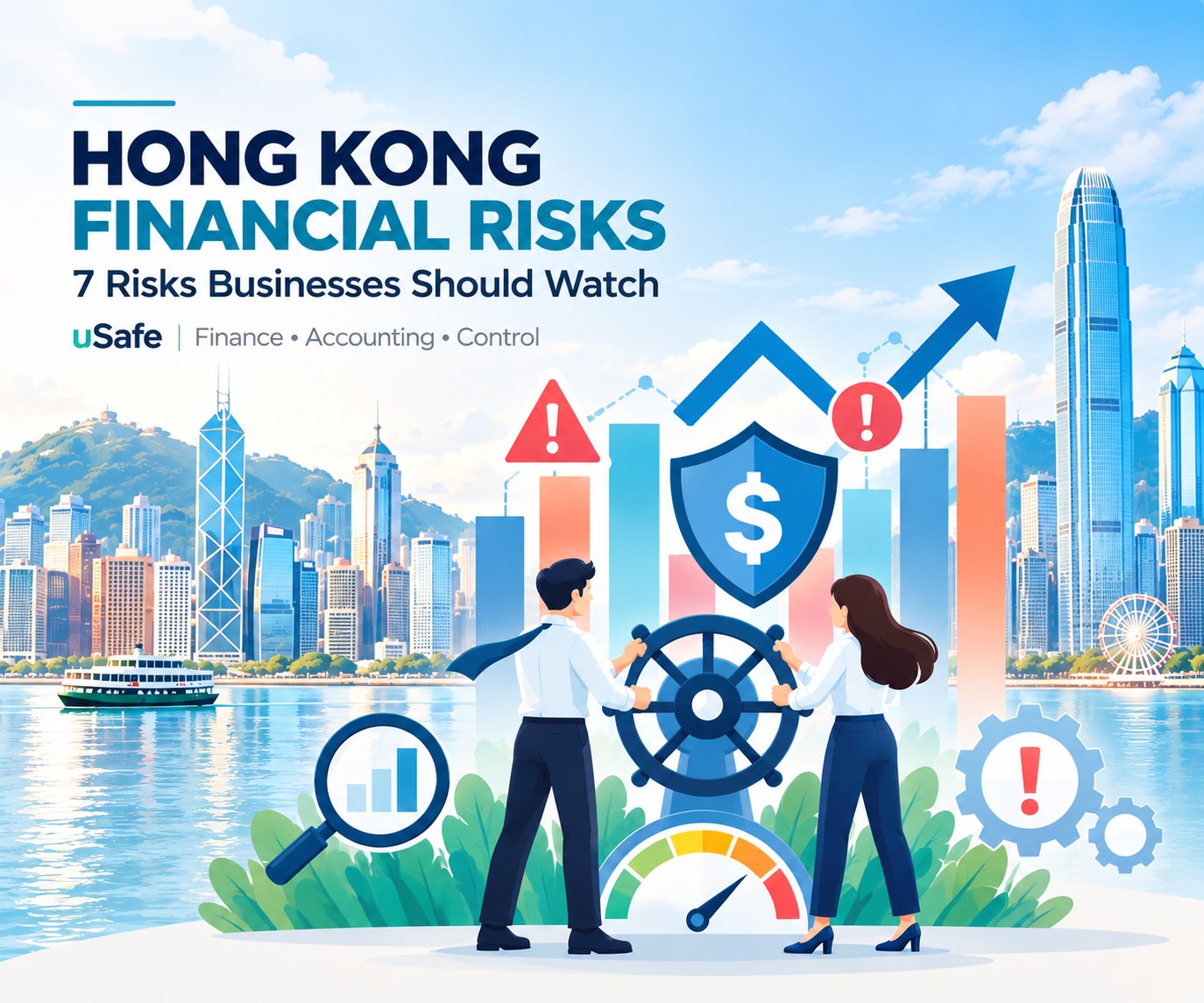
Hong Kong Financial Risks: 7 Risks Businesses Should Watch
Running a business in Hong Kong requires more than accurate bookkeeping. Hong Kong financial risks can appear in everyday transactions, payment processes, cash flow, and financial records. However, these risks often remain unnoticed until they create larger financial problems.
Therefore, businesses should identify potential risks early and build practical controls around them. In this article, we explore seven common Hong Kong financial risks and explain how businesses can manage them more effectively.
What Are Hong Kong Financial Risks?
Hong Kong financial risks are potential problems that can affect a company’s cash flow, financial records, profitability, or daily operations.
For example, these risks may involve:
- Unpaid customer invoices
- Poor cash flow visibility
- Uncontrolled expenses
- Missing financial documents
- Duplicate or incorrect payments
- Weak approval processes
- Inconsistent financial data
Although each issue may appear small, several problems can accumulate over time. As a result, regular financial checks can help businesses identify issues before they become more difficult to manage.
1. Unpaid Customer Invoices
Late customer payments can put pressure on business cash flow. At the same time, strong sales figures do not necessarily mean that sufficient cash is available.
For this reason, businesses should regularly review:
- Outstanding invoices
- Invoice due dates
- Customer payment history
- Overdue balances
- Expected collection dates
Moreover, an accounts receivable report gives management a clearer view of expected incoming cash. Consequently, finance teams can follow up on overdue accounts sooner.
2. Poor Cash Flow Visibility
Profit does not always mean that a company has enough cash.
For instance, a business may record revenue today but receive the payment several weeks later. Meanwhile, salaries, suppliers, rent, and other expenses may need to be paid earlier.
Therefore, companies should monitor profitability and cash flow together.
A monthly cash flow review can include:
- Opening cash balance
- Expected customer payments
- Supplier payments
- 工资单
- Taxes
- Operating expenses
- Closing cash balance
In addition, management can compare expected cash movements with actual transactions. This comparison makes potential cash shortages easier to identify and supports better planning.
3. Uncontrolled Business Expenses
Small expenses can become significant when they happen repeatedly. For example, software subscriptions, employee expenses, professional fees, and miscellaneous purchases may remain unnoticed without regular reviews.
To reduce this risk, businesses can establish clear expense controls.
These controls can include:
- Define spending limits.
- Require appropriate approval.
- Keep supporting documents.
- Review recurring expenses.
- Compare expenses with the budget.
As a result, management can understand where money is going. Furthermore, regular reviews can reveal unnecessary or unusual costs sooner.
4. Missing Financial Documents
Financial records become easier to review when transactions have appropriate supporting documentation. However, businesses sometimes have invoices without payment records or expenses without clear explanations.
Consequently, finance teams may spend additional time searching for information later.
A practical document control process should connect:
Transaction → Invoice → Payment → Accounting Record
In addition, documents should follow consistent naming and filing procedures. This approach makes information easier to locate when management, accountants, or auditors need it.
Hong Kong Record-Keeping Requirements
Documentation also matters from a Hong Kong tax perspective.
According to the Hong Kong Inland Revenue Department, businesses must keep sufficient records of income and expenditure so that assessable profits can be readily determined. Generally, these records need to be retained for at least seven years.
Therefore, document management should form part of the normal finance process. Businesses can review the official guidance through the Hong Kong Inland Revenue Department – Record Keeping.
5. Duplicate or Incorrect Payments
Payment errors can occur when businesses process a large number of invoices. For example, the same supplier invoice may be entered twice, or an incorrect amount may be paid.
To reduce this risk, a basic payment review can compare:
- Supplier name
- Invoice number
- Invoice date
- Amount
- Payment status
- Approval record
Furthermore, supplier information should be reviewed regularly. This additional step can help identify unusual changes before payments are released.
As a result, businesses can reduce avoidable payment errors while maintaining a clearer payment trail.
6. Weak Financial Approval Controls
As a business grows, more employees may gain access to financial processes. However, unclear responsibilities can make errors harder to identify.
For example, one person may prepare a payment while also approving and recording it. Instead, companies can separate responsibilities where practical.
A simple process could be:
Prepare → Review → Approve → Pay → Reconcile
This structure creates clearer accountability. Moreover, it makes unusual transactions easier to investigate.
Why Segregation of Duties Matters
Segregation of duties does not necessarily require a large finance department.
For smaller businesses, responsibilities can still be divided between:
- Preparing transactions
- Approving payments
- Making payments
- Reconciling accounts
The exact structure will depend on the company’s size and resources. Nevertheless, even basic separation can improve financial visibility.
7. Inconsistent Financial Data
Another common Hong Kong financial risk involves differences between financial records.
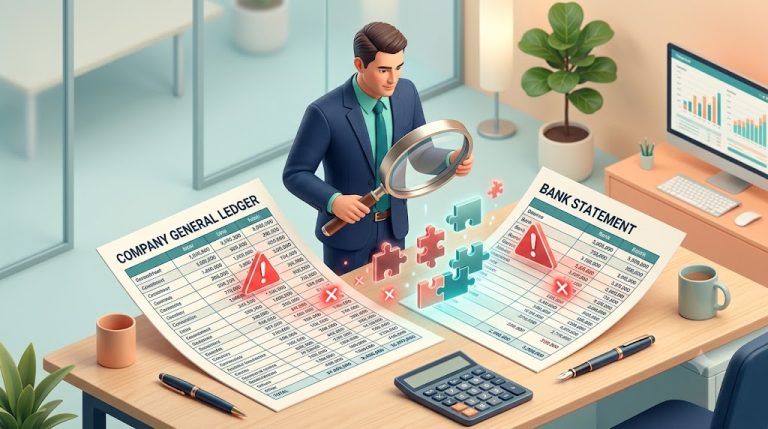
For example, an accounting balance may not match the bank statement. Similarly, customer balances may differ between internal reports and accounting records.
As a result, management reports may become less reliable.
Therefore, businesses should perform regular reconciliations.
Useful reconciliation areas include:
- Bank accounts
- Customer balances
- Supplier balances
- Credit cards
- Intercompany transactions
- Major balance sheet accounts
Regular reconciliation can reveal differences earlier. In turn, finance teams can investigate and correct them before they become larger problems.
How Can Businesses Reduce Hong Kong Financial Risks?
Reducing Hong Kong financial risks does not always require complicated systems. Instead, businesses can begin with a few consistent processes.
Build a Monthly Finance Routine
At the end of each month, review:
- Cash position
- Revenue
- Expenses
- Receivables
- Payables
- Bank reconciliations
- Unusual transactions
After the review, document important findings and follow up on unresolved issues. This creates a repeatable process and improves financial visibility.
Keep Financial Responsibilities Clear
Every important financial task should have a clear owner.
For example:
| Finance Activity | Main Responsibility |
|---|---|
| Invoice preparation | Finance team |
| Expense review | Department manager |
| Payment approval | Authorised person |
| Bank reconciliation | Finance team |
| Monthly review | Management |
The exact structure can vary by business size. Even so, clear responsibilities can reduce confusion and improve accountability.
Use a Financial Control Checklist
A simple checklist can make monthly reviews more consistent.
☐ Bank accounts reconciled
☐ Overdue invoices reviewed
☐ Supplier balances checked
☐ Major expenses reviewed
☐ Supporting documents collected
☐ Payments checked
☐ Unusual transactions investigated
☐ Monthly reports reviewed
☐ Cash flow updated
Although the checklist is simple, it can help teams maintain consistent finance controls.
Hong Kong Corporate Filing Is Another Risk Area
Financial risk is not limited to cash and accounting records. Businesses should also monitor corporate filing obligations.
For example, a local Hong Kong private company generally needs to deliver its annual return within 42 days after the anniversary of its incorporation date. The Companies Registry provides official guidance and a filing calculator for checking the relevant deadline.
Furthermore, late filing can result in substantially higher registration fees. The applicable fee depends on how late the annual return is delivered.
Therefore, companies should maintain a corporate compliance calendar alongside their finance calendar.
Businesses can check the official requirements through the Hong Kong Companies Registry – Annual Return for Local Private Companies.
When Should a Hong Kong Business Review Its Financial Risks?
Businesses should not wait until year-end to review financial risks.
Instead, monthly reviews can identify issues while they are still manageable. In addition, a deeper review may be useful when:
- Revenue increases quickly
- The company hires more employees
- New suppliers are added
- The business enters a new market
- Transaction volume increases
- Several entities share financial resources
- Management notices unusual financial movements
Under these circumstances, stronger controls can help the finance function keep pace with business growth.
How uSafe Can Help With Hong Kong Financial Risks
uSafe supports businesses with accounting, bookkeeping, financial reporting, audit, and corporate compliance services in Hong Kong.
For businesses that need local support, uSafe Hong Kong Services covers areas such as accounting and bookkeeping, financial statement preparation, management reporting, reporting compliance, and audit services.
In addition, businesses looking for ongoing accounting support can explore uSafe Accounting, Bookkeeping & Financial Statements.
For companies operating across several Asian markets, uSafe also provides a Regional Finance Control approach that connects local finance processes with regional reporting and financial control.
A Simple Hong Kong Financial Risk Checklist
Before closing each month, management can ask five simple questions:
1. How much cash is currently available?
2. Which customers still have outstanding balances?
3. Which major expenses need further review?
4. Does every important transaction have supporting documentation?
5. Do the financial records match the underlying transactions?
If these questions have clear answers, management has a stronger starting point for financial decision-making. More importantly, regular reviews can prevent small issues from becoming larger problems.
Frequently Asked Questions
What are the most common Hong Kong financial risks?
Common risks include late customer payments, poor cash flow visibility, uncontrolled expenses, missing documents, payment errors, weak approval controls, and inconsistent financial data.
How often should a business review financial risks?
A monthly review is a practical starting point for many businesses. However, companies with high transaction volumes or more complex operations may need more frequent checks.
How long should Hong Kong businesses keep financial records?
According to the Hong Kong Inland Revenue Department, business records generally need to be retained for at least seven years.
Can small businesses use financial controls?
Yes. Small businesses can start with simple controls such as bank reconciliation, expense approval, invoice tracking, document organisation, and monthly financial reviews.
Why is financial documentation important?
Good documentation helps businesses understand and verify transactions. Furthermore, it makes financial reviews more efficient because supporting information is easier to locate.
How can uSafe help with Hong Kong financial control?
uSafe can support businesses with accounting, bookkeeping, financial reporting, audit, reporting compliance, and finance-related processes in Hong Kong. Businesses can learn more through uSafe Hong Kong Services.
Conclusion
Hong Kong financial risks can develop quietly through everyday business activities. However, regular reviews can help companies identify problems earlier.
By monitoring cash flow, reviewing expenses, reconciling financial records, organising documents, and maintaining clear approval processes, businesses can create a more reliable finance environment.
At the same time, companies should monitor corporate filing deadlines and maintain appropriate financial records. This helps connect daily finance management with broader compliance responsibilities.
Ultimately, the goal is straightforward: identify financial risks early, control them consistently, and keep your business financially organised.
Strengthen Your Finance Process With uSafe
If your business needs a clearer and more organised finance process, uSafe can support you with accounting, bookkeeping, financial reporting, audit, and Hong Kong corporate compliance services.
Explore uSafe Hong Kong Services to learn more about how your business can strengthen its finance processes.
Contact uSafe to discuss your accounting and financial control needs.

 Chinese
  English